
Your training translates.
If you've served, you already have the hardest part of this job. The discipline. The composure under pressure. The willingness to do the work before the work pays off. Every one of those traits is what medical device companies are actually buying when they hire a rep.
What you already have. What we teach.
What you don't have yet is the clinical vocabulary and the OR exposure. That's what MedRep Academy's 12-week program gives you. In three months, you can go from transitioning service member to credentialed, field-ready medical device sales candidate: ready to interview anywhere in the US.
The hard part built in.
- Preparation
A device rep who walks into a case without studying the day before becomes a liability. You're already wired to prep.
- Composure
OR culture is unforgiving. Surgeons run hard, and a rep who folds under pressure gets replaced fast. You handle pressure.
- Accountability
In a case, there is nowhere to hide. If the instrument isn't there, it's your fault. You're trained to own outcomes.
- Communication under constraint
You learned to be concise and confident where vagueness gets people hurt. Surgeons value exactly that.
The technical half in twelve weeks.
- Clinical vocabulary
Anatomy, imaging, procedures. Enough to follow any pre-op discussion and keep up in the case.
- OR exposure
30+ live surgical cases observed, physician-led, across orthopedic, spine, and cross-specialty procedures.
- Field logistics
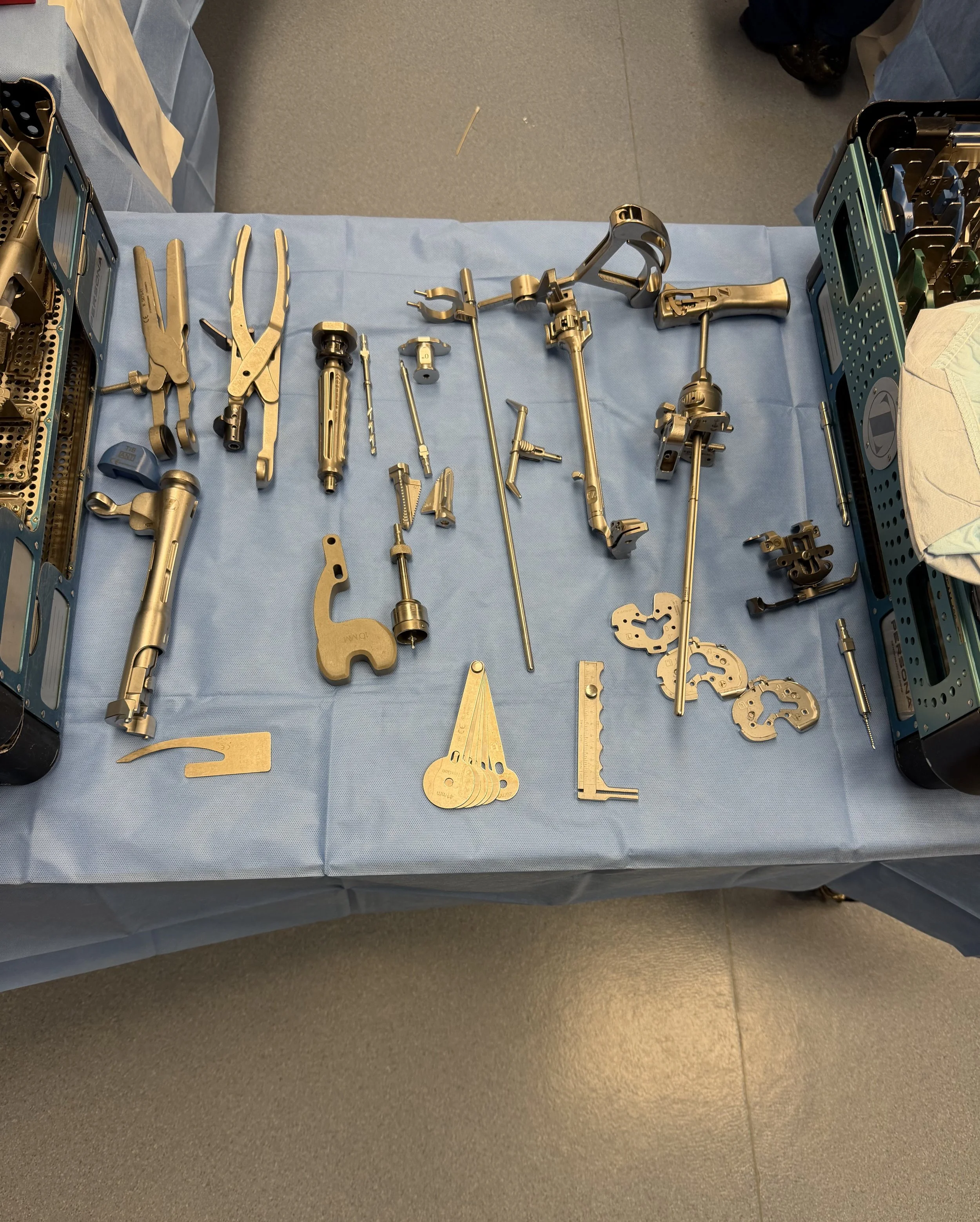
Tray management, loaner coordination, credentialing, hospital workflow. The quiet work that keeps cases running.
- Career readiness
Portfolio, resume, interview prep, and direct connections to hiring managers who already know what to expect from MedRep graduates.
Talk to any VP of sales. Ask what the top reps have in common.
Talk to any VP of sales at a major orthopedic or spine company and ask what the highest-performing segment of their rep force has in common. The consistent answers are military background, college athletics, or both. It's not a coincidence. The cognitive and behavioral traits that make someone succeed in those worlds are the same traits that make someone succeed in the OR.
Wired to study before the case. Never walks in cold.
Handles pressure without folding. Holds steady when it counts.
Owns outcomes. No finger-pointing when a tray is short.
Concise, confident communication. Surgeon-ready on day one.
This is not a desk job with healthcare branding.
It's a physical, logistical, deadline-driven career where the quality of your work is measured by how well a surgeon performs in the case you prepared for. If that sounds appealing rather than intimidating, you're the profile this industry is looking for.
A typical day-one rep arrives at the hospital before 6 AM, verifies tray setup in central sterile processing, is present in the OR during the case, troubleshoots any instrumentation issues in real time, and transitions to another case at another facility by mid-afternoon. The pace is fast, the stakes are real, and the compensation reflects both.
Most device companies hire into territories nationwide so a MedRep graduate from Texas, California, the Midwest, or the Northeast can be recruited back to their home region after the Atlanta cohort.
Reach out first. We'll give you a straight answer.
We've worked with transitioning service members from every branch and every region. If you're weighing this, email us, we can tell you whether the program fits your timing and goals before you submit the application.